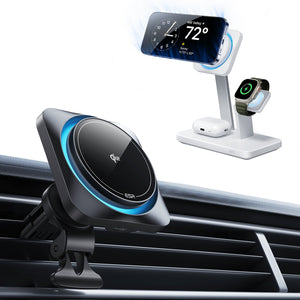
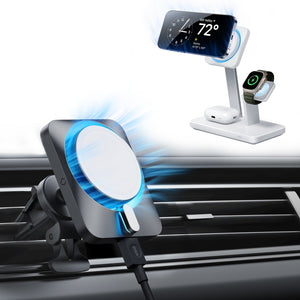
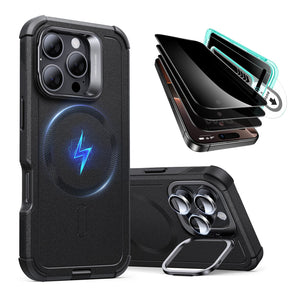
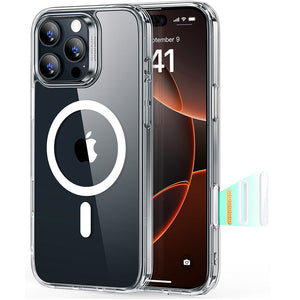



Slim, rugged, clear, kickstand — there are more options than ever, and most product pages look identical. This guide explains what each type actually does, corrects common misconceptions, and links to deeper ESR resources for the specifics.

Contents
Do You Actually Need an iPhone Case?
iPhone glass has gotten tougher over the years — Ceramic Shield on the front, textured matte glass on the Pro backs. Apple clearly put effort into durability. So the "do I need a case?" question is reasonable, not lazy.
The honest answer is that it depends on your situation. If you drop your phone once or twice a year, mostly on carpet or hardwood? You can probably get away without one. Use it on job sites, hand it to children, or regularly juggle it while doing something else? A case will save you money over the life of the phone.
Apple charges US $279–$379 to replace an iPhone 16 Pro screen out of warranty. That's not a scare tactic — it's the published service pricing. A case in the US $25–$50 range covers that risk repeatedly.
The other argument for cases is resale value. A two- to three-year-old iPhone in clean condition, with no back scratches or camera ring wear, sells for meaningfully more than those showing lots of heavy wear or deep scratches. Cases protect the metal frame and camera module as much as they protect against drops — and the camera module on the iPhone 15–17 Pro series sticks out far enough that it contacts flat surfaces when you set the phone face-up.
Model compatibility note: iPhone cases are made for specific models. An iPhone 16 case won't fit an iPhone 16 Pro — the camera module dimensions and button layout differ. Always check the exact model before buying, not just the screen size.
Case Materials: What They Mean in Practice
Most case listings mention materials but don't explain why they matter. Here's what's actually relevant when you're reading a product page.
TPU (thermoplastic polyurethane) is the most common case material and for good reason — it's flexible, absorbs impact, and grips well. Nearly every case uses it somewhere, even if only for the bumper frame. ESR has a full explainer on TPU phone cases covering the different grades and what to look for.
Polycarbonate (PC) is a rigid, hard plastic used for the outer shells of rugged cases and sometimes for the back panel. Scratch-resistant and stiff, it's typically combined with TPU in a hybrid build.
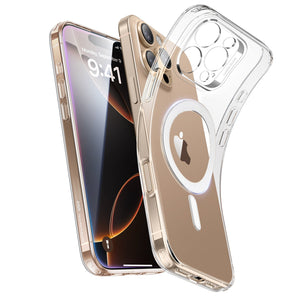
Acrylic is the material used for the back panel on clear cases. This is where quality matters most — untreated acrylic or cheap TPU clear cases yellow visibly within months, especially with UV exposure. Treated or coated acrylic holds up longer. ESR's Armor and Classic Hybrid use an acrylic back rated 3x more scratch-resistant than comparable materials, with yellowing resistance built in.
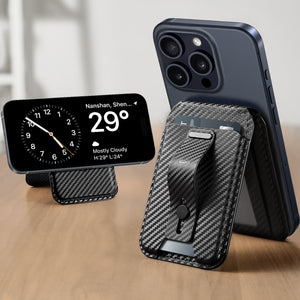
Carbon fiber is less common but worth knowing. It's light, rigid, and has a distinctive woven texture. ESR covers this in depth in their carbon fiber iPhone case guide — including whether the protection trade-offs make sense for daily use.
Silicone has a soft, smooth feel and good shock absorption. The main downsides: it attracts lint readily and can stain with certain colors or fabrics over time.
iPhone Case Types: What Each One Actually Does
The category names — slim, rugged, clear, kickstand — are consistent across brands, but what they deliver varies a lot. Here's what each type covers and who it makes sense for.
Slim phone case
Usually 1–2 mm of added thickness. Keeps the iPhone's natural shape and weight. Handles surface scratches and light bumps. Not designed for hard drops onto concrete or tile. Good for office environments and everyday light use.

Rugged case with drop protection
Multi-layer build — hard outer shell over a shock-absorbing inner layer, reinforced corners. ESR's Cyber Tough series is rated to 23 ft drop protection with 7x military-standard coverage on all sides. Adds noticeable thickness compared to slim or hybrid options.
Clear phone case
Shows the iPhone's original color and finish. The critical variable is the back material — cheap TPU clears yellow within months. Anti-yellowing clear cases use a treated acrylic back that stays optically clear for much longer. ESR's clear cases use this approach across the Armor and Classic Hybrid lines.

Kickstand phone case
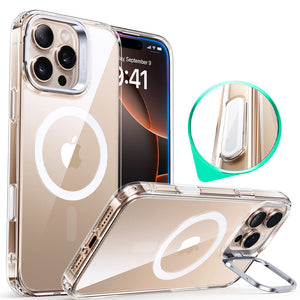
Has a built-in stand for hands-free viewing. ESR's Stash Stand design folds around the camera module and supports 0–85° angles in both portrait and landscape. The stand is made from zinc alloy and tested to 3,000+ open/close cycles. Full Stash Stand guide →
MagSafe-compatible case
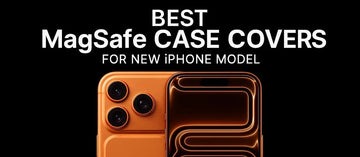
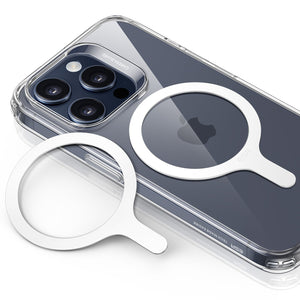
Has an embedded magnet array that snaps to MagSafe chargers, wallets, and mounts. Magnet strength varies by brand. ESR uses a 1,500 g holding force — roughly double Apple's official MagSafe cases. How MagSafe cases work →
Patterned / custom cases
Frosted pastels, woven textures, bold prints. ESR's 2025 lineup includes frosted "milky" finishes in sage, lavender, and pink that show the iPhone's form through a translucent matte surface — smudge-resistant and visually distinct from plain clear cases. Case design and style guide →

Slim vs. Rugged iPhone Cases: The Real Difference
This is the most common decision point, and it usually gets oversimplified into "protection vs. style." The better framing is: what type of drop are you protecting against?
A slim case handles the majority of real-world drops — phone slides off a table, falls out of a pocket onto pavement, gets knocked off a nightstand. A rugged case is engineered for harder impacts: waist-height drops onto concrete, construction sites, and outdoor use, where the phone gets thrown around. The trade-off is bulk. The Cyber Tough adds 3–5 mm compared to a slim hybrid case.
ESR's Armor cases hit a practical middle ground: military-grade drop certification with Air Guard reinforced corners, but without the full multi-layer thickness of a rugged build. For most people who want real protection without a noticeably bigger phone, it's the better fit than going all the way to rugged Cyber Tough cases.
For a deeper breakdown on choosing based on your lifestyle and risk profile, ESR's ultimate phone case buying guide covers the full decision framework.
| Feature | Slim Phone Case | Hybrid (Armor) | Rugged (Cyber Tough) |
|---|---|---|---|
| Added Thickness | ~1–2 mm | ~2–3 mm | ~3–5 mm |
| Drop Certified | Rarely | Military-Grade | 23 ft / 7 m |
| Corner Protection | Basic | Air Guard Corners | 3-Layer + Air Guard |
| MagSafe Strength | Varies | 1,500 g | 1,500 g |
| Kickstand Option | No | Yes (Classic Hybrid + Stash Stand) | Yes (Stash Stand) |
| Best For | Light, Everyday Carry | Most Users | Outdoor, Job Sites, Parents |
6 Things to Check Before Buying an iPhone Case
Most people make their decision based on how a case looks in photos, then regret it. These are the six things that actually matter.
1 Exact model fit
iPhone 16 and iPhone 16 Pro are different physical sizes. Cases don't transfer between models, even when screen sizes match. Confirm the specific model number before buying — not just the series name.
2 Stated drop rating
Look for a specific drop height (e.g., 23 ft) rather than just "military-grade." ESR's Cyber Tough states 23 ft / 7x military-standard. The Armor is certified but doesn't publish a specific height. The difference in what you can claim matters.
3 MagSafe magnet strength
If you use MagSafe chargers, mounts, or snap-on wallets, the case needs a real embedded magnet ring. ESR's MagSafe cases use 1,500 g holding force — Apple's official cases run around 800 g. Weak magnets mean wallets that slide off and chargers that misalign.
4 Camera cutout for your model
iPhone 16 and 17 added a Camera Control button on the right side. If the case doesn't have a dedicated cutout or flexible cover for it, you lose access to one of the better camera features Apple added. ESR builds Camera Control compatibility into its current lineup.
5 Anti-yellowing treatment (clear cases)
Cheap TPU clear cases can yellow in 3–4 months with normal use. Look for cases that specify a hard acrylic back with UV-resistant or yellowing-resistant coating. ESR's Armor and Classic Hybrid use scratch-resistant acrylic rated for long-term clarity.
6 Wireless charging clearance
Most cases work fine with wireless charging. The exception is very thick, rugged cases or cases with metal elements. If you use a MagSafe wallet, note that some wallets need to be removed before wireless charging — ESR's Geo Magnetic Wallet Stand specifies this. Check before assuming it'll charge through the wallet.
Top ESR iPhone Case Picks for 2026
ESR has served over 130 million customers and makes model-specific cases for the iPhone 13 through 17 series. The picks below cover the main use cases with real specs from ESR's product listings.
Best rugged iPhone case with drop protection
ESR Cyber Tough Magnetic Case with Stash Stand
Three-layer structure: hard TPE + PC outer shell, soft shock-absorbing inner shell, reinforced corners. Rated to 23 ft drop protection with 7x military-standard coverage on all sides. The Stash Stand is made of zinc alloy, folds flat when not in use, doubles as a camera guard, and supports 0–85° viewing in both portrait and landscape orientations. Stand tested to 3,000+ open/close cycles. MagSafe holding force: 1,500 g. Available in multiple colors for iPhone 16 and 17 series, including Pro Max. Note that the camera guard adds approximately 2.4 mm of depth on iPhone 17 models.
23 ft drop rated, 7x military-grade, 3-layer build, Stash Stand 0–85°, 1,500 g MagSafe, Camera Control cover
What works
-
Highest drop rating in ESR's lineup
-
Kickstand folds flush when not in use
-
Stand doubles as camera guard
-
MagSafe ring stays unobstructed
Worth knowing
-
Noticeably bulkier than hybrid cases
-
Camera guard adds ~2.4 mm extra depth
Best clear phone case for iPhone / Best overall hybrid
ESR Armor Tough Case
Hard acrylic back over a TPU frame. The acrylic is scratch-resistant — ESR states it offers 3x the scratch resistance of comparable materials — and is treated to resist long-term yellowing. Air Guard corners are the reinforced points designed to absorb impact where drops concentrate. Raised screen edge and Camera Guard protect the lens when the phone sits flat. MagSafe-compatible and slim enough for wireless charging without removing the case. Available from iPhone 13 through 17 series. This is ESR's most widely stocked case and works across the widest range of models.
Anti-yellowing, acrylic back, Air Guard corners, Military-grade certified, raised camera guard, MagSafe compatible
What works
-
Slimmer than full rugged cases
-
Real drop certification, not just marketing
-
Acrylic back resists yellowing
-
Available for the widest model range
Worth knowing
-
No published specific drop height
-
Clear back shows fingerprints
Best anti-yellowing clear case with MagSafe
ESR Classic Hybrid Magnetic Case
Crystal-clear acrylic back with anti-yellowing treatment on a TPU bumper frame. MagSafe magnet strength: 1,500 g — ESR describes this as roughly double Apple's official MagSafe cases. The protection rating is 3x military-standard (less than the Cyber Tough's 7x, but still enough for everyday drops). Comes with or without the Stash Stand kickstand. Camera Control cutout on iPhone 16 and 17 Pro models. This is ESR's most popular case for users who want to show off their iPhone's color without giving up MagSafe performance. Available in clear or frosted variants for the 17 series.
1,500 g MagSafe Anti-yellowing acrylic 3x military-grade Camera Control optional Stash Stand
What works
-
Strongest MagSafe in a clear case
-
Slim profile, real protection
-
An optional kickstand version is available
Worth knowing
-
Less protection than Cyber Tough
-
Glossy back picks up fingerprints
Want to Carry Cards with Your iPhone? Here's How ESR Actually Does It
This is one of the most common questions about iPhone cases, and it's worth being direct about how ESR's approach works — because it's different from a traditional built-in wallet case.
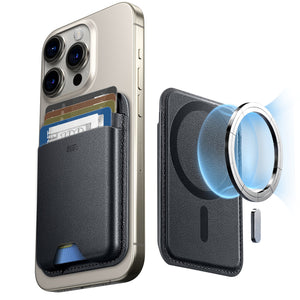
ESR does not make a wallet case (a case with a card slot physically built into it). Instead, ESR offers a case + magnetic wallet bundle: a MagSafe-compatible phone case paired with a separate magnetic wallet that snaps onto the back of the case using magnets.
How the case + magnetic wallet bundle works
You buy an ESR MagSafe-compatible case (Classic Hybrid, Cyber Tough, or similar) together with one of ESR's magnetic wallets. The wallet attaches to the case's magnet ring and can be detached in seconds when you don't need it — for lighter carry, or when charging wirelessly (the wallet must be removed for wireless charging on most models).
-
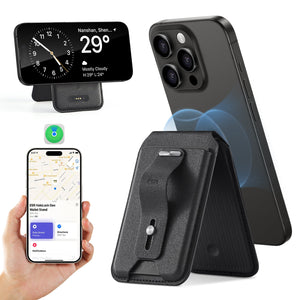
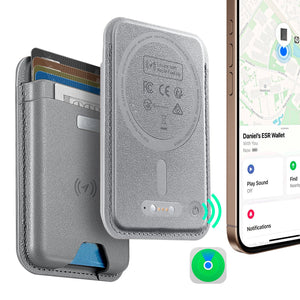
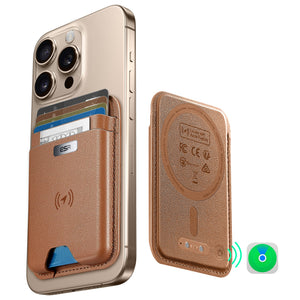
Geo Magnetic Wallet Stand — holds up to 5 cards, RFID blocking, built-in stand, available with a grip loop. Find My compatible on select versions.
-
Magnetic Wallet Boost — holds up to 4 cards and 3 banknotes, compact profile, dynamic tension spring for easy card access.
-
Aura Wallet Stand — vegan leather finish, holds cards, doubles as a stand.
-
Classic Magnetic Wallet Stand — 5-card capacity, RFID blocking, adjustable stand for portrait and landscape.
The ESR magnetic wallets use magnets rated twice as strong as Apple's MagSafe wallet, ensuring they hold securely during normal use. The wallet will not demagnetize standard credit or debit cards. NFC function on the iPhone is unaffected.
The key trade-off compared to a built-in wallet case: the magnetic wallet adds thickness when attached and must be removed for wireless charging. The upside is flexibility — you can go slim when you don't need cards, and attach the wallet only when you do.
ESR covers the full comparison between wallet cases and magnetic wallet combos — including when each approach makes more sense — in their guide: Phone wallet case vs. separate wallet combo →
Important: ESR's magnetic wallets require a MagSafe-compatible case to attach properly. When you buy an ESR bundle (case + wallet), compatibility is guaranteed. If you already own a non-ESR case, check that it has a proper embedded MagSafe magnet ring — a generic magnetic ring may not hold the wallet reliably.
Which ESR Case Fits Your iPhone Model?
ESR makes model-specific cases for every iPhone from 13 through 17 Pro Max. Camera layout, button position, and overall dimensions change with each generation — don't assume a case for a previous model will work on a new one.
| iPhone Model | Screen | Recommended ESR Case | Why |
|---|---|---|---|
| iPhone 17 Pro Max | 6.9" | Cyber Tough + Stash Stand | Redesigned camera module needs proper guard; maximum drop protection. |
| iPhone 17 Pro | 6.3" | Classic Hybrid Magnetic | Shows off the new finish; 1,500 g MagSafe strength; Camera Control cutout. |
| iPhone 17 / Air | 6.1"–6.6" | Armor Tough Clear | Slim profile complements the lighter design; anti-yellowing back. |
| iPhone 16 Pro Max | 6.9" | Cyber Tough or Classic Hybrid | Both support the Camera Control button; choose based on your preferred protection level. |
| iPhone 16 / 16 Plus | 6.1"–6.7" | Armor Tough or Classic Hybrid | Balanced protection and slim design; fully MagSafe compatible. |
| iPhone 15 Series | 6.1"–6.7" | Armor Tough or Classic Hybrid | Full MagSafe support; anti-yellowing clear backs available across models. |
Upgrading from iPhone 16 to 17? The camera module changed. Don't carry over your old case — buy one made specifically for your new model.
Frequently Asked Questions
What is the best iPhone case?
It depends on what you're protecting against. The ESR Cyber Tough is the strongest option for drop protection, while the Classic Hybrid is the most popular choice for everyday use. The Armor Case offers a balance between protection and slimness. The best case depends on how you actually use your phone.
Are iPhone cases necessary?
No, but they can significantly reduce repair costs. A quality case is much less expensive than replacing a damaged screen, and it can also help maintain your phone's resale value by preventing scratches and wear.
What is the most protective iPhone case?
Among ESR's lineup, the Cyber Tough provides the highest level of protection. Its multi-layer construction, reinforced corners, and integrated camera guard help protect against serious drops and impacts.
What are the best clear iPhone cases?
The best clear cases resist yellowing and scratches. ESR's Armor Case features an acrylic back with anti-yellowing properties, while the Classic Hybrid adds strong MagSafe support for users who rely on magnetic accessories.
How do I choose an iPhone case?
Consider your drop risk, whether you use MagSafe accessories, and your exact iPhone model. Users needing maximum protection may prefer rugged cases, while those prioritizing a slim design may choose a hybrid or clear case.
What iPhone cases have card holders?
ESR focuses on MagSafe-compatible cases paired with detachable magnetic wallets rather than built-in card slots. This design provides more flexibility and easier wireless charging.
Are cheap iPhone cases good?
Budget cases may protect against minor scratches, but they often lack reliable drop protection, durable materials, and strong MagSafe performance. Mid-range cases generally offer better long-term value and protection.
Quick Picks by Use Case
If you've read through and want a direct recommendation based on your situation:
Best for drop protection ESR Cyber Tough + Stash Stand
23 ft rated · 3-layer · Kickstand · 1,500 g MagSafe
Best clear case Classic Hybrid Magnetic
Anti-yellowing · 1,500 g MagSafe · Camera Control
Best all-rounder ESR Armor Clear
Military-grade · Anti-yellowing · Widest model range
Dig deeper on specific topics:
💳Card Storage Phone Wallet Case vs. Magnetic Wallet Bundle:The trade-offs between built-in wallet cases and ESR's detachable magnetic wallet approach.
🔲MaterialsIs a Carbon Fiber Case Right for Your iPhone? When carbon fiber makes sense as a case material — and when it doesn't.