






AirPods 5 is official. AirPods Pro 3 remains Apple's more capable in-ear model. The camera-equipped AirPods often discussed as “AirPods Ultra” are still a future product with no official name or release date.
Apple announced AirPods 5 on September 9, 2026, with availability beginning September 18. The biggest change is straightforward: Active Noise Cancellation now starts at $129 in Apple's open-ear lineup. The $149 version adds wireless charging, on-stem volume control, and longer battery life.
That makes the choice less about which model is newest and more about fit. AirPods 5 keeps the open-ear shape. AirPods Pro 3 uses silicone ear tips for a physical seal, stronger noise cancellation, and a broader set of fitness and hearing features.
Last updated: September 2026. AirPods 5 and AirPods Pro 3 specifications below are based on Apple's current product and technical specification pages. “AirPods Ultra” refers to reported camera-equipped AirPods development; Apple has not announced that product name, price, specifications, or release date. Community comments are used only to reflect buying concerns, not to establish product specifications.
The Lineup, Mapped
AirPods 5 now sits between the older standard AirPods experience and AirPods Pro 3. The rumored camera model belongs in a different category because it cannot be bought yet.
| AirPods 5 | AirPods 5 with Wireless Charging Case | AirPods Pro 3 | “AirPods Ultra” | |
|---|---|---|---|---|
| Price | $129 | $149 | $249 | Not announced |
| Design | Open-ear | Open-ear | In-ear | Unconfirmed |
| Chip | H2 | H2 | H2 | Unconfirmed |
| Active Noise Cancellation | Yes | Yes | Yes, up to 3× more than AirPods 5 | Reported, not confirmed |
| ANC Battery Life | Up to 4 hours | Up to 5 hours | Up to 8 hours | TBC |
| Battery with Case, ANC On | Up to 20 hours | Up to 22 hours | Up to 24 hours | TBC |
| Volume Swipe | No | Yes | Yes | TBC |
| Heart Rate Sensing | No | No | Yes | Unconfirmed |
| Hearing Health Features | No | No | Hearing Test, Hearing Aid and Hearing Protection where supported | Unconfirmed |
| Dust, Sweat and Water Resistance | IP57 | IP57 | IP57 | TBC |
| Best For | Lowest-cost open-ear ANC | Open-ear ANC with better controls and charging | Stronger isolation, workouts and longer sessions | Wait for Apple to confirm it |
Three Models, Three Different Users
AirPods 5 is now the entry point for Apple's Active Noise Cancellation. Both versions use the H2 chip and Apple's new multiport acoustic architecture. Apple says the open-ear ANC removes up to 50% more external noise than AirPods 4 with Active Noise Cancellation.
The design matters as much as the number. AirPods 5 does not seal the ear canal, so it cannot block outside sound in the same way as an in-ear model. The trade-off is a fit that many standard AirPods users prefer for long sessions.

AirPods Pro 3 takes the opposite approach. Silicone ear tips create a physical seal before ANC starts working. Apple rates its noise cancellation at up to three times that of AirPods 5. It also provides up to eight hours of listening with ANC enabled, heart rate sensing during workouts, and Apple's hearing health features where available.

“AirPods Ultra” remains a convenient name for Apple's reported camera-equipped AirPods project, not an official Apple product. Recent reporting still points to 2027, but Apple has not confirmed a launch date, retail name, price, or final hardware.
AirPods 5 vs AirPods Pro 3: Start With Fit
The easiest way to choose between AirPods 5 and AirPods Pro 3 is to decide whether you want an open-ear or sealed in-ear fit.
| If You Care Most About... | Better Choice | Why |
|---|---|---|
| Open-ear comfort | AirPods 5 | No silicone tip or sealed ear-canal fit |
| Strong ANC on trains or flights | AirPods Pro 3 | The ear-tip seal adds passive isolation before ANC |
| Lower price | AirPods 5 | ANC starts at $129 |
| Long listening sessions | AirPods Pro 3 | Up to 8 hours with ANC enabled |
| Workout heart rate tracking | AirPods Pro 3 | Includes heart rate sensing during workouts |
| Hearing health features | AirPods Pro 3 | Supports Hearing Test, Hearing Aid and Hearing Protection where available |
This is why AirPods 5 is not simply a cheaper AirPods Pro 3. The two models solve different problems. Pro 3 prioritizes isolation and feature depth. AirPods 5 prioritizes open-ear comfort and price.
Is the $149 AirPods 5 Worth the Extra $20?
For many buyers, yes. Both AirPods 5 versions have the same core ANC and acoustic platform, but the $149 model adds more than wireless charging.
| Feature | AirPods 5 — $129 | AirPods 5 with Wireless Charging Case — $149 |
|---|---|---|
| ANC | Yes | Yes |
| ANC Battery per Charge | Up to 4 hours | Up to 5 hours |
| Total Battery with ANC | Up to 20 hours | Up to 22 hours |
| USB-C Charging | Yes | Yes |
| Qi / Apple Watch Charging | No | Yes |
| Volume Swipe | No | Yes |
| Find My Case Speaker | No | Yes |
If USB-C charging is enough and price matters most, the $129 AirPods 5 does the important job: it gives you the new open-ear ANC experience.
If you plan to keep the earbuds for several years, the extra hour of listening time, volume control, wireless charging, and Find My speaker make the $149 version easier to justify.
AirPods 5 vs AirPods 4: Is It Worth Upgrading?
The answer changes depending on which AirPods 4 you own.
AirPods 4 without ANC → AirPods 5: This is the clearer upgrade. ANC is now standard, dust and water resistance moves from IP54 to IP57, and Apple has revised the acoustic system.
AirPods 4 with ANC → AirPods 5: The case is less urgent. Both generations use H2 and the same open-ear concept. AirPods 5 improves ANC and durability, while the $149 version adds volume swipe and an extra hour of ANC battery life.
AirPods 4 ANC still working well? There is no strong reason to replace it purely because AirPods 5 exists.

This is also where some of the early Reddit reaction makes sense. Existing AirPods 4 ANC owners often describe the new model as useful rather than essential. New buyers see it differently: $129 now buys ANC instead of requiring the old $179 step-up model.
So, Which AirPods Should You Actually Get?
Start here: Do silicone ear tips bother you?
Yes → Choose AirPods 5.
If you only want the lowest price, choose the $129 version. If you want volume swipe, wireless charging, Find My case audio, and longer battery life, choose the $149 version.
No → Do you need strong isolation for flights, trains, or noisy offices?
Yes → Choose AirPods Pro 3.
The in-ear seal, stronger ANC, and eight-hour ANC battery make more sense for sustained noise.
No → Do you need heart rate sensing or Apple's hearing health features?
Yes → Choose AirPods Pro 3.
No → AirPods 5 is likely enough.
You keep the open-ear fit and spend substantially less.
Already own AirPods 4 with ANC?
Keep them unless better ANC, IP57, volume swipe, or battery life solves a problem you already have.
Waiting for AirPods Ultra?
Do not delay a purchase around an unannounced product unless camera-based AirPods are the feature you specifically want.
What People Are Actually Saying
AirPods 5 is new enough that long-term reliability data does not exist yet. Reddit is more useful here for understanding what buyers care about than for judging battery aging, durability, or real-world performance over time.
| Discussion Theme | What Users Are Focused On | What It Means for Buyers |
|---|---|---|
| $129 with ANC | The lower starting price is one of the most positively received changes. | AirPods 5 is strongest as a new purchase or an upgrade from older standard AirPods. |
| $149 version | Volume swipe and the extra hour of battery receive as much attention as wireless charging. | The $20 upgrade is easy to justify for frequent users. |
| Open-ear vs in-ear | Some users avoid Pro models because silicone tips feel uncomfortable; others prefer the secure in-ear fit. | Fit should come before feature count. |
| AirPods 4 ANC owners | Many see AirPods 5 as an incremental upgrade rather than a replacement they need immediately. | Upgrade only if the new features address a real limitation. |
| AirPods Pro owners | Most do not view AirPods 5 as an upgrade unless they want to leave the in-ear fit behind. | AirPods 5 and Pro 3 serve different comfort preferences. |
The pattern is consistent: price gets people interested, but fit decides which model makes sense. AirPods 5 does not need to outperform Pro 3 at everything to have a clear place in the lineup.
Why AirPods Ultra Got Delayed — and Why That Matters
The name “AirPods Ultra” still needs a qualification. Apple has not announced a product with that name.
What has been reported is Apple's work on camera-equipped AirPods designed to provide visual context to Siri and Visual Intelligence. Development references and a demonstration found in macOS software added weight to those reports, but the product did not appear at Apple's September 2026 event.
Recent reporting points to 2027 after software and supply-chain issues affected the schedule. That is still a reported target, not an Apple release date.
There is also uncertainty around the final name. Camera-equipped AirPods may remain part of the AirPods Pro family rather than launch as a separate Ultra tier.

For buyers, the distinction is useful: AirPods 5 and AirPods Pro 3 can be compared using confirmed specifications. AirPods Ultra cannot.
The Camera Nobody Around You Agreed To
The camera-equipped AirPods reports raise a question that ordinary earbuds do not: how will people nearby know when outward-facing sensors are active?
AirPods are easy to overlook in public. Add visual sensing to the stem and the device changes, even if the cameras are meant for environmental recognition rather than conventional photography.
The potential benefits are clear. Hands-free object recognition, contextual information, navigation, and accessibility could all make sense from an ear-level device.
The privacy side matters just as much. Apple would need to explain what the sensors capture, when they operate, where information is processed, and how people around the wearer can identify active sensing.
Until Apple announces the product, those questions should remain questions. Prototype behavior and leaked software references are not final retail specifications.
AirPods 5 Release Date and the Rumors That Changed
AirPods 5 was announced on September 9, 2026, with availability beginning September 18. That closes several rumors that appeared before launch.
| Pre-Launch Question | What Apple Confirmed |
|---|---|
| Would AirPods 5 use H3? | No. AirPods 5 uses the H2 headphone chip. |
| Would ANC remain optional? | No. ANC is standard on both AirPods 5 versions. |
| Would the standard model remain open-ear? | Yes. |
| Would water resistance improve? | Yes. AirPods 5 is rated IP57, up from IP54 on AirPods 4. |
| Would AirPods 5 get Pro-style volume swipe? | Yes, but only on AirPods 5 with Wireless Charging Case. |
Keeping the old rumors separate from confirmed specifications matters because many AirPods 5 searches still lead to pre-launch coverage. The product Apple released is simpler than some of those predictions: H2 stays, the open-ear design stays, and most of the upgrade comes from ANC, acoustics, durability, controls, battery life, and pricing.
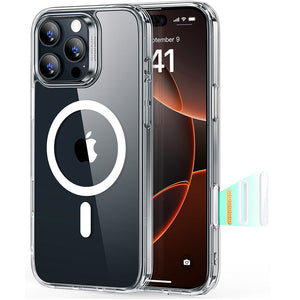
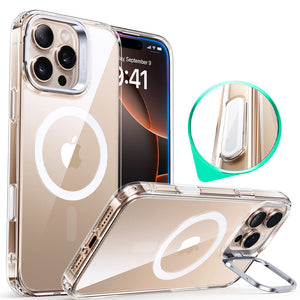
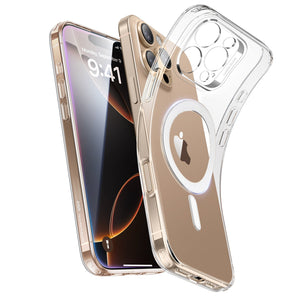
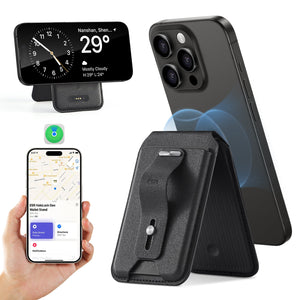
While You're Deciding, Protect What You Have
The charging case usually sees more daily wear than the earbuds. It moves between pockets, bags, desks, cars, and charging surfaces, often next to keys and cables.
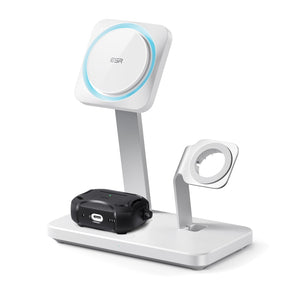
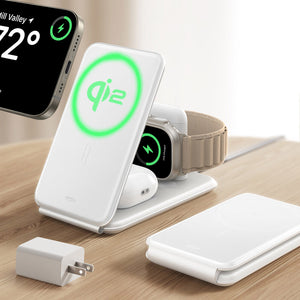
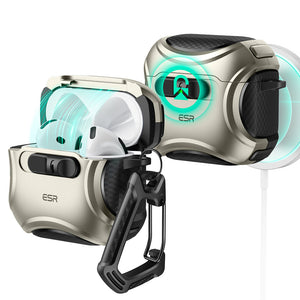
ESR makes cases for AirPods 5 (2026), AirPods 4 (2024), and AirPods Pro 3 (2025). Options include magnetic charging support, locking lids, hybrid protection, and slim silicone designs. Each case is built around the dimensions and charging layout of the AirPods model it is made for.
For future camera-equipped AirPods, fit cannot be confirmed until Apple releases final hardware. Current AirPods protection options are available at ESR AirPods Cases.
ESR AirPods 5 Cases: MagSafe, FlickLock and Everyday Protection
Choose an AirPods 5 case based on how you carry your earbuds. Cyber FlickLock and Pulse FlickLock add a secure locking lid, Orbit Hybrid keeps the design light and compact, while Pulse Lite offers simple magnetic protection for everyday use.


Frequently Asked Questions
When did AirPods 5 come out?
Apple announced AirPods 5 on September 9, 2026. Pre-orders opened after the announcement, with availability beginning September 18, 2026.
How much do AirPods 5 cost?
AirPods 5 starts at $129 in the U.S. AirPods 5 with Wireless Charging Case costs $149 and adds wireless charging, a Find My case speaker, on-stem volume control, and longer battery life.
Does AirPods 5 have Active Noise Cancellation?
Yes. Active Noise Cancellation is standard on both AirPods 5 versions. Apple says AirPods 5 can remove up to 50% more external noise than AirPods 4 with Active Noise Cancellation.
Does AirPods 5 use the H3 chip?
No. AirPods 5 uses Apple's H2 headphone chip. Pre-launch reports about an H3 upgrade did not match the product Apple announced.
Is AirPods 5 better than AirPods Pro 3?
Not across the board. AirPods 5 is better suited to buyers who prefer an open-ear fit and a lower price. AirPods Pro 3 provides stronger noise isolation, up to eight hours of battery life with ANC, heart rate sensing, and hearing health features where supported.
Should I upgrade from AirPods 4 to AirPods 5?
It makes more sense for owners of standard AirPods 4 because AirPods 5 adds ANC at the same $129 starting price. AirPods 4 with ANC owners get better ANC, IP57 resistance, and additional features on the $149 version, but the H2 chip and open-ear design remain familiar.
Is AirPods Ultra real?
Apple is reported to be developing camera-equipped AirPods, but it has not announced a product called AirPods Ultra. The final name, specifications, price, and release date remain unconfirmed.
When will AirPods Ultra be released?
Apple has not announced an AirPods Ultra release date. Current reporting points to camera-equipped AirPods development continuing toward 2027, but that timing is not an official Apple launch date.
AirPods 5 specifications and pricing reflect Apple's September 2026 U.S. lineup. Features such as hearing health tools and Live Translation may depend on region, device, language, and software support.